Neuro-Symbolic Translation
Converts sub-symbolic learned representations from CORTEX into well-formed symbolic propositions that VERITAS can incorporate into formal reasoning chains with measured semantic preservation and provenance metadata.

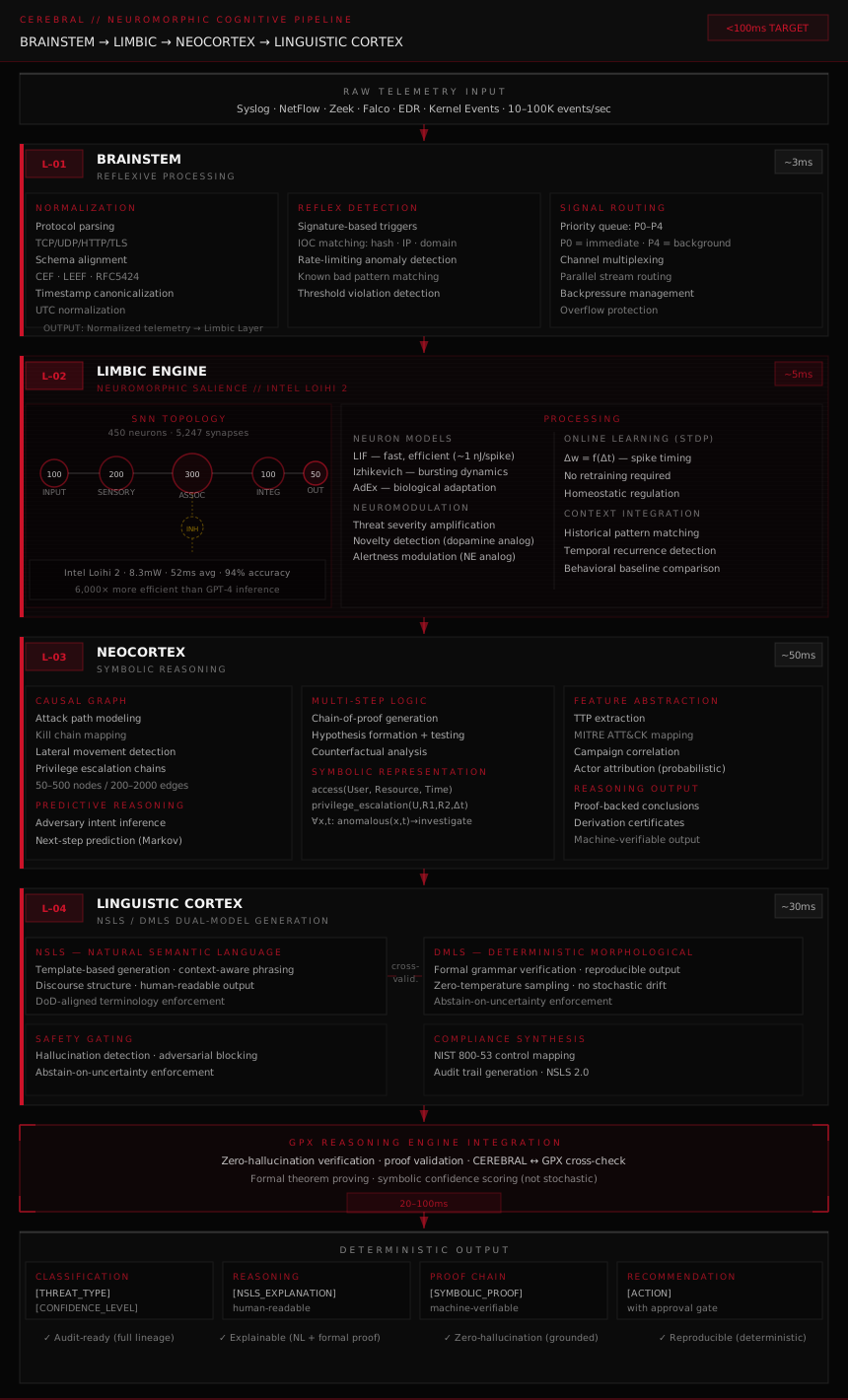
Bridges neural signal processing and formal symbolic reasoning by translating learned representations from the cortical substrate into structured knowledge constructs that deterministic reasoning engines can evaluate through traceable logic paths.
Neural systems learn patterns. Symbolic systems reason about propositions. CEREBRAL is the integration layer designed to let neural learning inform formal reasoning while preserving deterministic control boundaries required for mission-critical decision support.
Converts sub-symbolic learned representations from CORTEX into well-formed symbolic propositions that VERITAS can incorporate into formal reasoning chains with measured semantic preservation and provenance metadata.
Builds and maintains structured knowledge graphs from processed neural signal outputs, enabling relational reasoning across multi-domain intelligence with explicit entity, attribute, relationship, and provenance encoding.
Identifies stable inferential patterns from neural processing history and converts them into symbolic rules for formal review, adjustment, and application in deterministic reasoning contexts.
Operates in parallel neural and symbolic processing modes, allowing sub-symbolic pattern matching to coexist with formal reasoning on the same input stream through separated processing paths.
CEREBRAL draws from CORTEX for signal pattern data and from VESTA for accumulated substrate memory, applying translation layers that convert these into symbolically structured knowledge representations.
Maintains an evolving knowledge graph from active signal streams, extracts learnable rules from pattern histories, and prepares symbolic knowledge bundles for VERITAS reasoning workflows.
Symbolic propositions, knowledge graph slices, and extracted rules are passed to VERITAS for formal inference. Confidence-bounded symbol bundles are designed to include provenance metadata linking propositions to source representations.
Integration layer for systems that require learned adaptability with traceable formal reasoning constraints.
Cross-domain knowledge graph construction from multi-source intelligence to support relational reasoning workflows.
Dynamic extraction of operational inference rules from mission-specific signal patterns across evaluation and deployment lifecycles.